

Crossover Components

Mundorf
Foil capacitors
Mundorf SUP8-0.10 | 0.10 µF | 2% | 1400 V | Mcap SUPREME Classic Capacitor
0.1 µF
±2%
10 pieces in stock
Oct 30.

Mundorf
Foil capacitors
Mundorf SUP8-0.22 | 0.22 µF | 2% | 1400 V | Mcap SUPREME Classic Capacitor
0.22 µF
±2%
8 pieces in stock
Oct 30.

Jantzen Audio
Resistors
Jantzen Audio 002-0121 | 27 Ω | 5 W | 1% | Superes Resistor
27 Ω
5 W
4 pieces in stock
Oct 30.

Jantzen Audio
Resistors
Jantzen Audio 002-0118 | 22 Ω | 5 W | 1% | Superes Resistor
22 Ω
5 W
10+ pcs in stock
Oct 30.

Intertechnik
Resistors
Intertechnik WAX20/0.33/5 | 0.33 Ω | 20 W | 5%
0.33 Ω
20 W
5 pieces in stock
Oct 30.

Dayton Audio
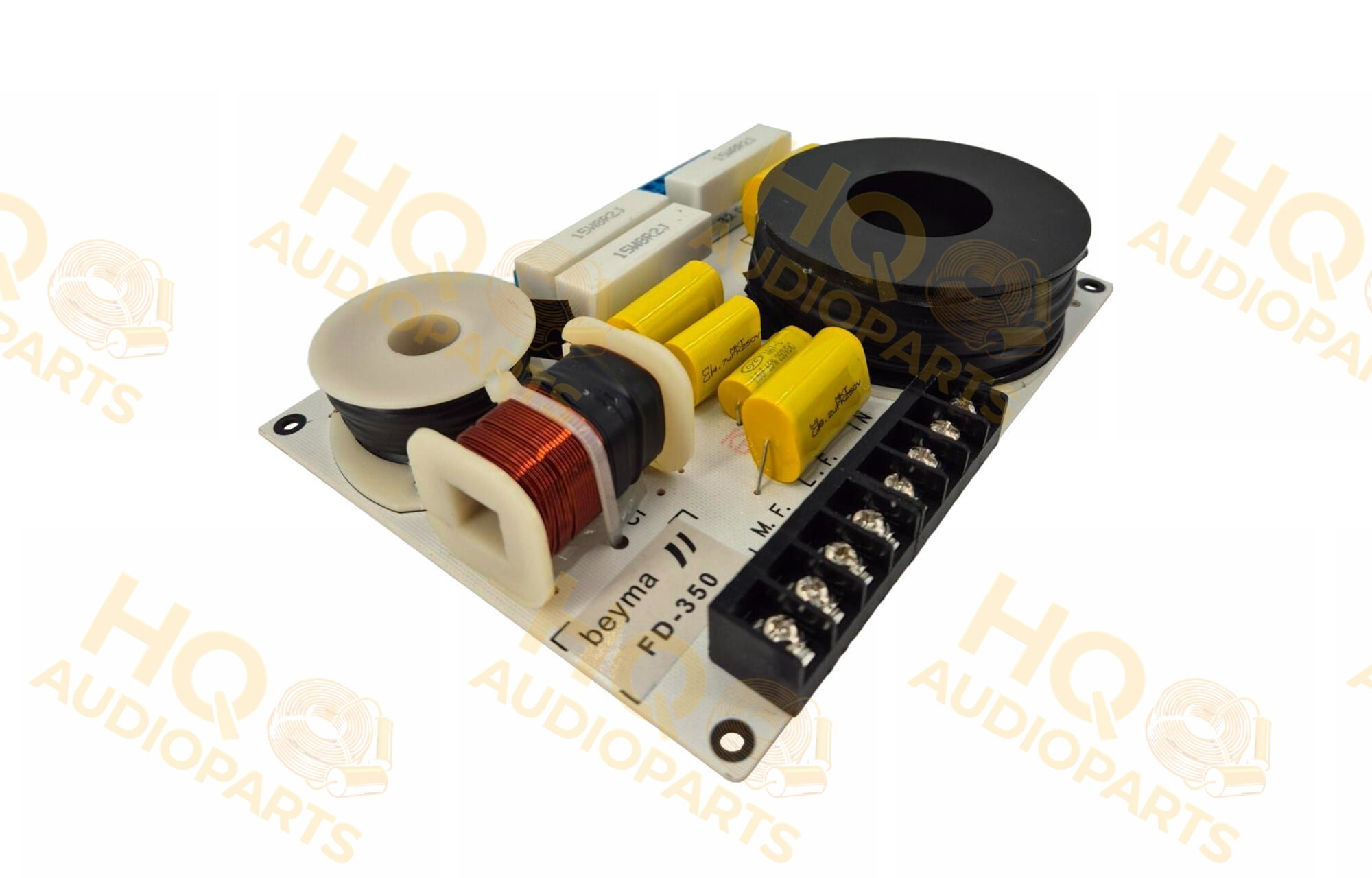
Assembled crossovers
Dayton Audio Low Pass Speaker Crossover 12 dB/Octave, 8 Ohm, 4500 Hz Assembled crossover
8 Ω
4500 Hz
2 pieces in stock
Oct 30.

PRV Audio
Assembled crossovers
PRV Audio 3DF750/5000 3-way Crossover
8 Ω
5000 Hz
3 pieces in stock
Oct 30.

Dayton Audio
Assembled crossovers
Dayton Audio High Pass Speaker Crossover 12 dB/Octave, 8 Ohm, 4500 Hz Assembled crossover
8 Ω
4500 Hz
6 pieces in stock
Oct 30.

Jantzen Audio
Iron core coils
Jantzen Audio 000-5210 | 6.8 mH | 0.35 Ω | 3% | 17 AWG | H Iron-core Coil
6.8 mH
0.35 Ω
4 pieces in stock
Oct 30.

Jantzen Audio
Iron core coils
Jantzen Audio 000-2418 | 1.5 mH | 0.125 Ω | 3% | 14 AWG | I Iron-core Coil
1.5 mH
0.125 Ω
10+ pcs in stock
Oct 30.

Jantzen Audio
Iron core coils
Jantzen Audio 000-5222 | 15 mH | 0.86 Ω | 3% | 18 AWG | H Iron-core Coil
15 mH
0.86 Ω
4 pieces in stock
Oct 30.

Jantzen Audio
Air core coils
Jantzen Audio 000-1975 | 3.5 mH | 1.10 Ω | 3% | 18 AWG | Air-core Coil
3.5 mH
1.1 Ω
10 pieces in stock
Oct 30.

Mundorf
Foil capacitors
Mundorf SUP8-0.33 | 0.33 µF | 2% | 1400 V | Mcap SUPREME Classic Capacitor
0.33 µF
±2%
10 pieces in stock
Oct 30.

Mundorf
Foil capacitors
Mundorf SUP8-0.47 | 0.47 µF | 2% | 600 V | Mcap SUPREME Classic Capacitor
0.47 µF
±2%
9 pieces in stock
Oct 30.

Jantzen Audio
Resistors
Jantzen Audio 002-0115 | 18 Ω | 5 W | 1% | Superes Resistor
18 Ω
5 W
10+ pcs in stock
Oct 30.

Jantzen Audio
Resistors
Jantzen Audio 002-0112 | 15 Ω | 5 W | 1% | Superes Resistor
15 Ω
5 W
10+ pcs in stock
Oct 30.

Intertechnik
Resistors
Intertechnik WAX20/0.47/5 | 0.47 Ω | 20 W | 5%
0.47 Ω
20 W
2 pieces in stock
Oct 30.

Dayton Audio
Assembled crossovers
Dayton Audio Low Pass Speaker Crossover 12 dB/Octave, 4 Ohm, 6000 Hz Assembled crossover
4 Ω
6000 Hz
4 pieces in stock
Oct 30.

Jantzen Audio
Iron core coils
Jantzen Audio 000-5305 | 6.8 mH | 0.40 Ω | 3% | 17 AWG | H Iron-core Coil
6.8 mH
0.4 Ω
6 pieces in stock
Oct 30.

Intertechnik
Iron core coils
Intertechnik CO44/100/050 | 10 mH | 3.48 Ω | 5% | 24 AWG
10 mH
3.48 Ω
2 pieces in stock
Oct 30.

Mundorf
Foil capacitors
Mundorf SUP8-1.00 | 1.00 µF | 2% | 600 V | Mcap SUPREME Classic Capacitor
1 µF
±2%
10 pieces in stock
Oct 30.

Jantzen Audio
Resistors
Jantzen Audio 002-0109 | 12 Ω | 5 W | 1% | Superes Resistor
12 Ω
5 W
10+ pcs in stock
Oct 30.

Jantzen Audio
Resistors
Jantzen Audio 002-0106 | 10 Ω | 5 W | 1% | Superes Resistor
10 Ω
5 W
10+ pcs in stock
Oct 30.

Intertechnik
Resistors
Intertechnik WAX20/0.68/5 | 0.68 Ω | 20 W | 5%
0.68 Ω
20 W
6 pieces in stock
Oct 30.
Read more: Crossover Components
A passive crossover decides which driver gets which part of the spectrum, and where and how steeply the bands hand over to each other. At least half of a well-designed speaker's sound is shaped here, not in the drivers themselves.
This section holds everything a crossover is built from: inductors, capacitors, resistors, circuit boards, driver protectors and ready-assembled networks. When refurbishing, start with aged electrolytic capacitors; for a new design, start by measuring the values precisely.