


Capacitors


Audio Note
Electrolytic capacitors
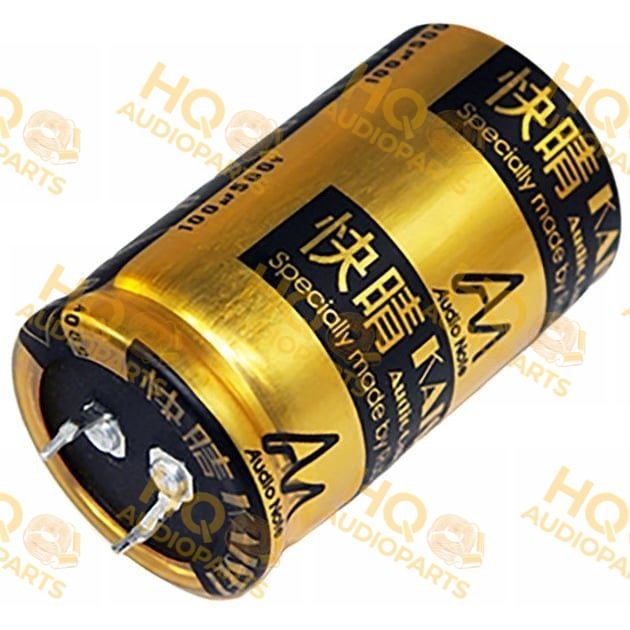
Audio Note CAP-100-STDR-220U-500V | 220 µF | 20% | 500 V
220 µF
±20%
6 pieces in stock
Oct 30.

Audio Note
Foil capacitors
Audio Note CAP-5080 | 0.11 µF | 10% | 630 V
0.11 µF
±10%
4 pieces in stock
Oct 30.


Audio Note
Foil capacitors
Audio Note CAP-5120 | 0.15 µF | 10% | 630 V
0.15 µF
±10%
4 pieces in stock
Oct 30.

Audio Note
Foil capacitors
Audio Note CAP-5130 | 0.18 µF | 10% | 630 V
0.18 µF
±10%
4 pieces in stock
Oct 30.


Audio Note
Electrolytic capacitors
Audio Note CAP-100-R-680U-63V | 680 µF | 20% | 63 V
680 µF
±20%
6 pieces in stock
Oct 30.

Audio Note
Electrolytic capacitors
Audio Note CAP-100-STDR-470U-350V | 470 µF | 20% | 350 V
470 µF
±20%
6 pieces in stock
Oct 30.

Audio Note
Electrolytic capacitors
Audio Note CAP-100-R-4700U-16V | 4700 µF | 20% | 16 V
4700 µF
±20%
10+ pcs in stock
Oct 30.

Audio Note
Electrolytic capacitors
Audio Note CAP-100-R-4700U-25V | 4700 µF | 20% | 25 V
4700 µF
±20%
10+ pcs in stock
Oct 30.


Audio Note
Electrolytic capacitors
Audio Note CAP-100-STDR-10000U-63V | 10000 µF | 20% | 63 V
10000 µF
±20%
10+ pcs in stock
Oct 30.

Audio Note
Electrolytic capacitors
Audio Note CAP-100-R-1000U-63V | 1000 µF | 20% | 63 V
1000 µF
±20%
6 pieces in stock
Oct 30.

Audio Note
Electrolytic capacitors
Audio Note CAP-100-R-100U-160V | 100 µF | 20% | 160 V
100 µF
±20%
4 pieces in stock
Oct 30.

Audio Note
Electrolytic capacitors
Audio Note CAP-100-R-50U-350V | 50 µF | 20% | 350 V
50 µF
±20%
2 pieces in stock
Oct 30.


Jantzen Audio
Electrolytic capacitors
001-7037 | 3.90 µF | 3% | 100 V | Alumen Z-Cap
3.9 µF
±3%
2 pieces in stock
Oct 30.

Audio Note
Electrolytic capacitors
Audio Note CAP-100-STDR-68000U-16V | 68000 µF | 20% | 16 V
68000 µF
±20%
10+ pcs in stock
Oct 30.

Audio Note
Electrolytic capacitors
Audio Note CAP-100-R-10000U-16V | 10000 µF | 20% | 16 V
10000 µF
±20%
10+ pcs in stock
Oct 30.

Audio Note
Electrolytic capacitors
Audio Note CAP-100-R-68U-350V | 68 µF | 20% | 350 V
68 µF
±20%
4 pieces in stock
Oct 30.
Read more: Capacitors
The capacitor is the heart of the high-pass filter: it shields the tweeter from low frequencies and smooths impedance in Zobel and notch networks. The part sitting in a tweeter's signal path passes every note, so both type and quality are audible.
Film capacitors (MKP, MKT, paper-in-oil, copper foil) belong in the signal path, bipolar electrolytics suit high-value bass sections, and power capacitors go into supplies. For crossovers, choose at least a 100 V rating and a tolerance of 5% or better.